
After washing I stand the chopping board on its edge to dry
The knife is already in the sink — and the board is still wet, lying flat “quicker that way”. Easy to stack it against the wall: by morning the underside stews, the wood smells damp, and the hand puts bread on a sticky…
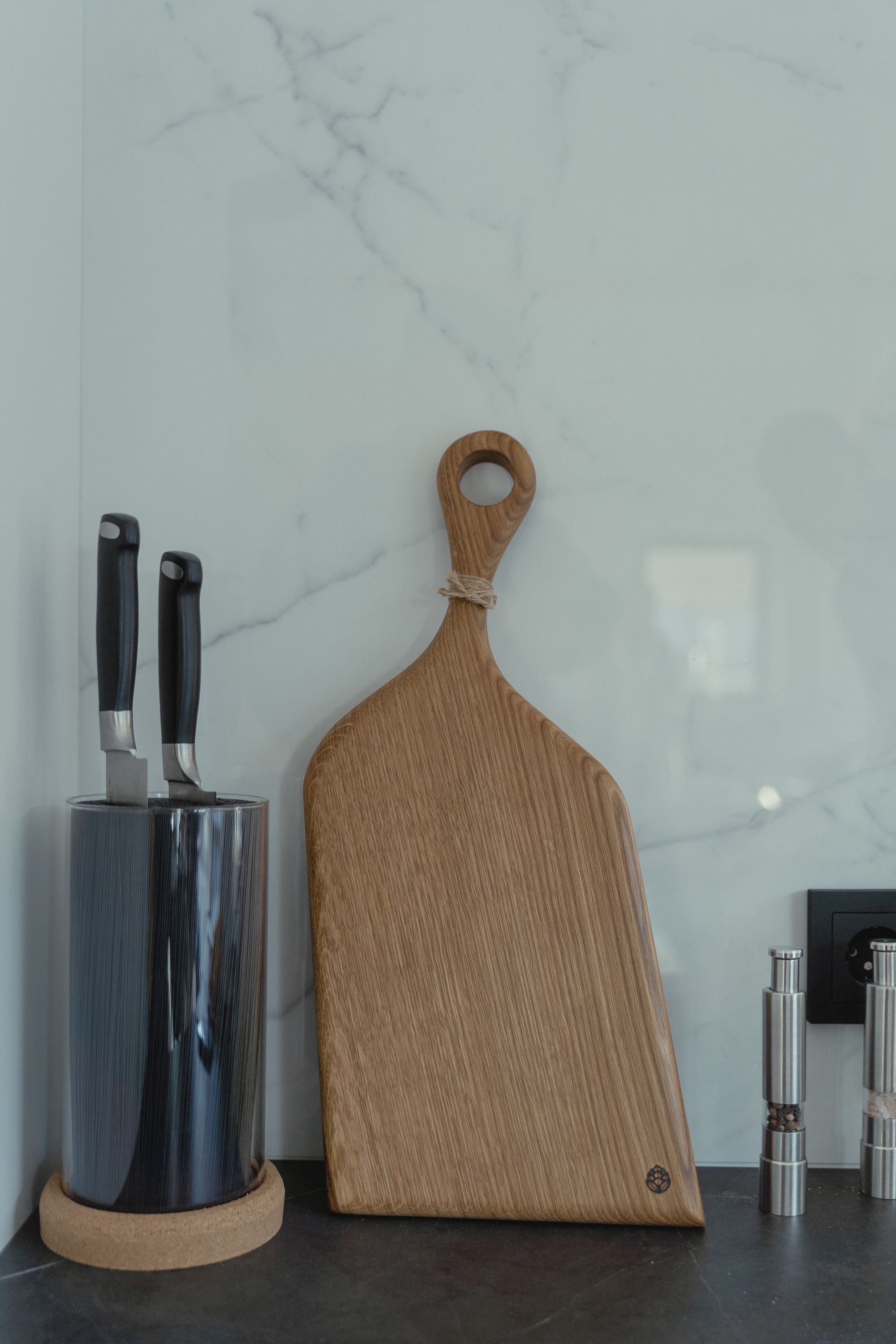
The knife is already in the sink — and the board is still wet, lying flat “quicker that way”. Easy to stack it against the wall: by morning the underside stews, the wood smells damp, and the hand puts bread on a sticky edge. I rinse the board, wipe it and stand it on its edge — so air reaches both sides, not a wet underside all night.
After washing I stand the chopping board on its edge to dry. Two boards for meat and vegetables is another note; beetroot on the board its own; washing after beetroot another story. Here it’s the board after water: on edge, dry — not flat in a damp stack.
If it has already darkened from water — only drying on edge in a dry place, not oil “to seal the damp in”. I don’t dry it on the radiator until it cracks. I’m not shopping for a new board with a review in this note — it’s about the one that already cut today’s onion.
I don’t need a board that stews flat all night. I need a dry edge I’m not ashamed to put bread on. At yours does the board dry on its edge — or already in the morning stick underneath from the stack?
Photo: Tima Miroshnichenko / Pexels
These are kitchen notes for adults, not medical advice.