
Half a cabbage in the fridge is still tomorrow's supper
I cut the head for tonight's soup. The other half goes into the fridge — not the bin, and not a forgotten bag that smells of old leaves by Friday.
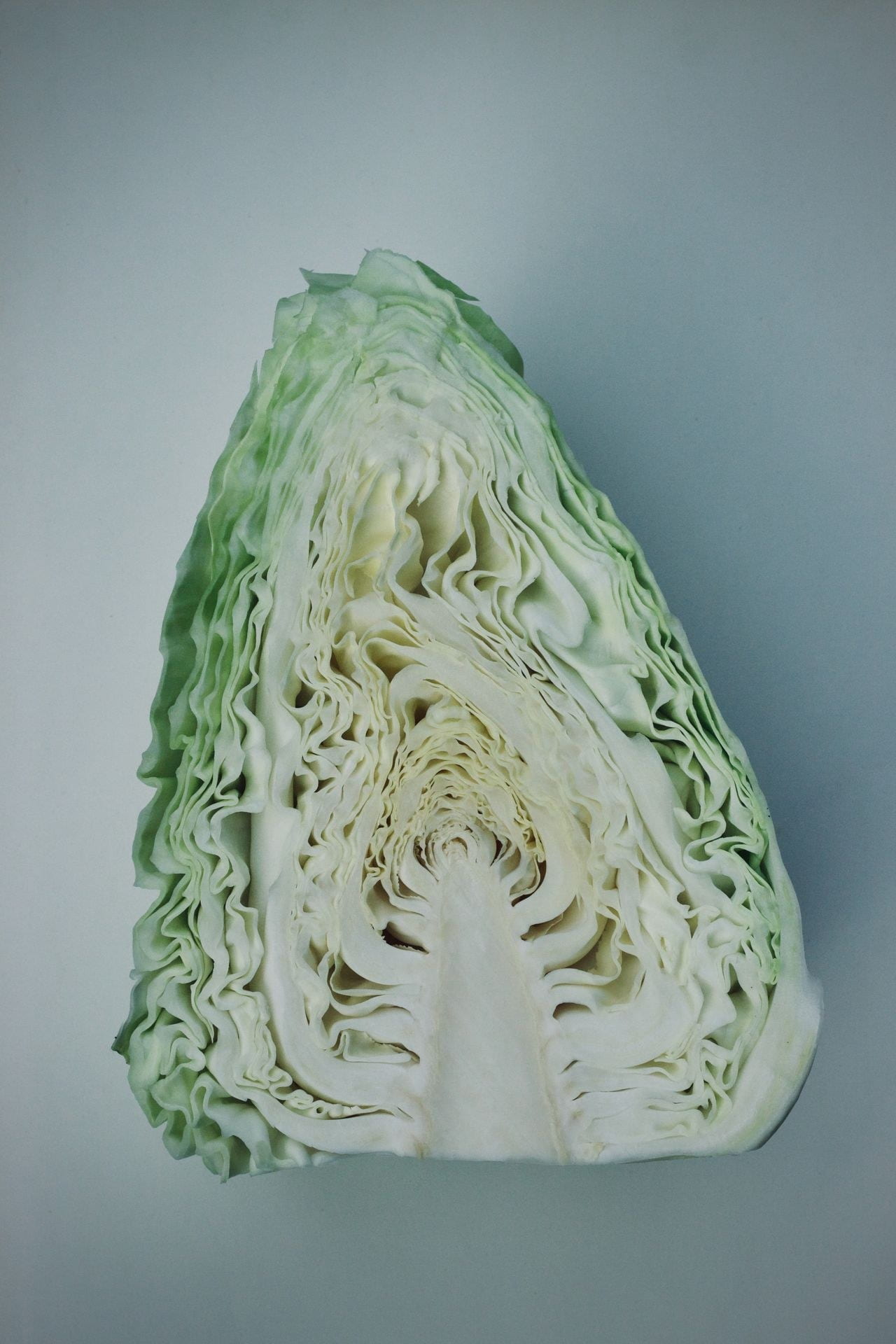
Knife, board, and a cut that still smells of the field
A head in the bag from the shop near home — heavy, firm, outer leaves a little damp from the mist by the veg shelf. On the board the knife clicks: half goes into the pot with potato and onion, the other stays on the table cut-side up. The cut smells sweet and sharp at once — not of a “diet”, of living cabbage. You can shove the rest into a crumpled bag and forget it. I have done that: by the week's end the bag is wet, the leaves grey, the hand walks itself to the bin. Today is different. The half is still supper, a salad, something stewed beside a cutlet. Not shame and not “leftovers”. Just the second half of the work.
How I keep the cut — without a lecture on wrap
I do not wash the cut. Water on the white flesh is an invitation to slime. An outer leaf already bruised in the bag — I peel it off. The half goes cut-side down on a plate or snug in a box, whichever fits the drawer. Wrap only if there is no box: tight to the cut, not a tent of air. In the veg drawer, not on the door where every opening brings warmth. In a day or two I look: if the edge has dried or gone a little grey — I shave a thin layer with the knife and cook. If it smells sour and wrong, or slime sits on the veins — into the bin without pity. The nose is kinder than a sticker date the head never had.
Where the second half goes while the first is boiling
Into borscht — shredded fine, not before the potato is soft: cabbage likes a short boil, or it turns into a grey rag. Into a pan with onion and a spoon of oil — stewed beside a cutlet or jacket potatoes; the smell goes sweet, almost nutty, when the leaf starts to shine. Into a salad — thin, with cucumber and a drop of vinegar or lemon, salt on the shred so the cabbage gives juice and does not squeak like raw paper. Sometimes straight back into the pot the next day: the house smells of supper again, and the head is not a reproach on the shelf. Stewed with butter is often dearer to the children than a “proper” salad — and I do not argue with an empty plate.
Short notes from this hob
- Do not wash the cut — water invites slime
- Cut-side down or in a snug box, in the veg drawer
- Grey edge — shave a thin layer; sour smell — into the bin
- In borscht — late and briefly; in the pan — with onion and oil
- Salad — thin, salt at once, acid to taste
What I do not do
I do not buy a tiny head “for one go” only from fear of leftovers — a proper head is cheaper and crisper, and the half lives if you do not abandon it. I do not keep cut cabbage a week “just in case” beside raw meat without a lid. I do not lecture the family about fibre while they chew. I do not shame myself for cabbage stewed in butter instead of a “light” supper from a picture. And I do not pretend every head in the shop is perfect: soft, with black veins by the core — I leave it and take another.
From this same kitchen
I already wrote about keeping food in how to store so you are not binning it, and about the pot in a pot on the hob makes the house lived-in. Cabbage sits well in borscht and beside plain potatoes from the site. The rest of the kitchen notes sit beside them.
Photo: Peter Dyllong, Pexels.
These are kitchen notes for adults, not medical advice.