
A cut lime — cut-side down or jar, not drying on the board
After fish or into a gin a lime half is already on the board — and the hand leaves the cut up “still useful”. Easy to forget: by evening the flesh is matte like a shoe-sole, almost no juice, a new whole one already…
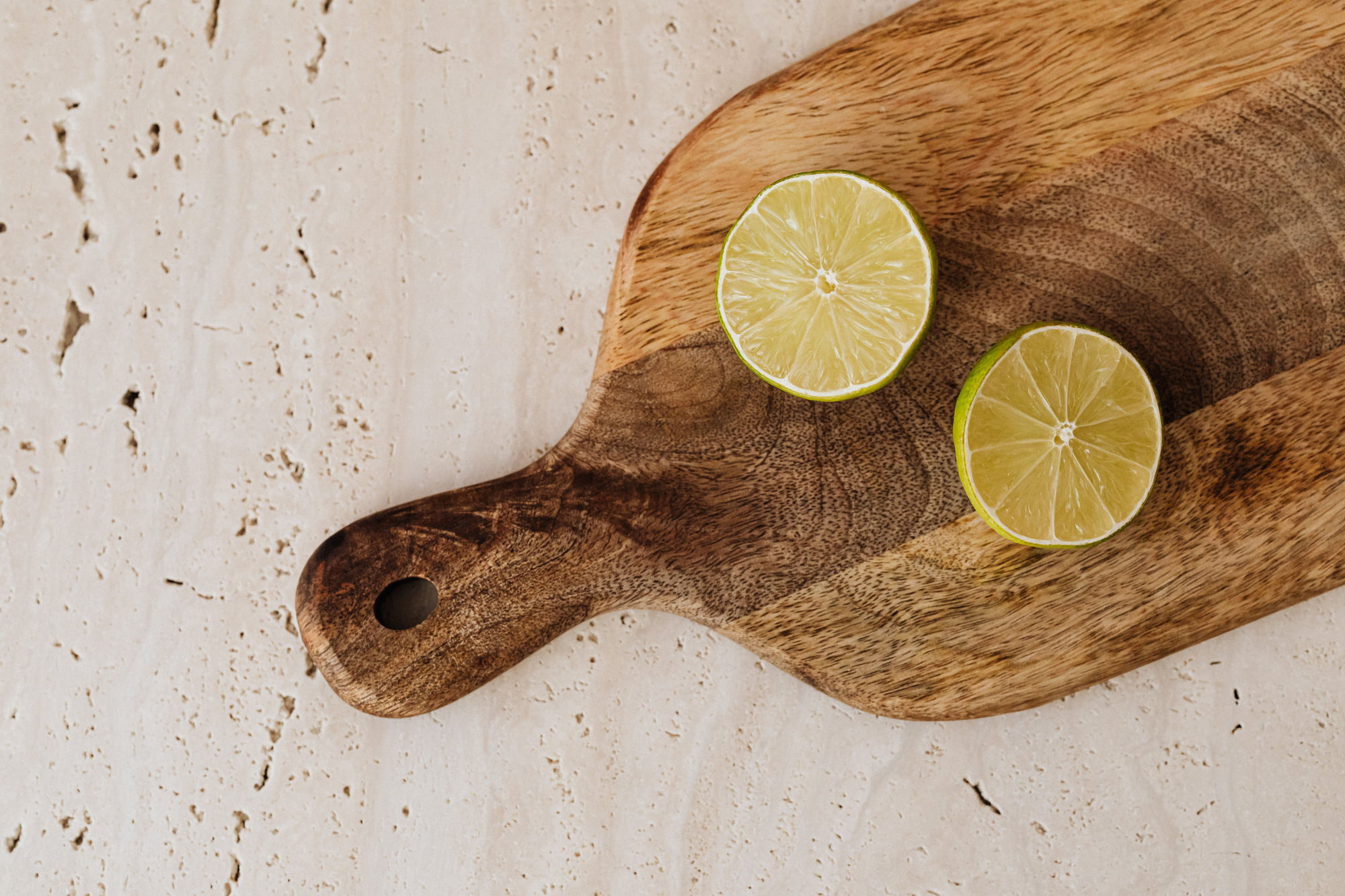
After fish or into a gin a lime half is already on the board — and the hand leaves the cut up “still useful”. Easy to forget: by evening the flesh is matte like a shoe-sole, almost no juice, a new whole one already opened “just in case”. I put the cut face-down on a saucer or in a small jar with a lid — so the lime still gives juice tomorrow, not dry out today.
A cut lime I don’t leave drying on the board — cut down or in a jar. A cut lemon that doesn’t dry out is another note; the last lemon half its own; a bowl of lemons on the table another story. Here it’s the lime after the knife itself: air dries faster than it seems — not a lecture about “citrus detox”.
If the edge is already dry — I trim thinly and squeeze on for fish or into a sauce. Mould or a smell with no lime left — bin, not “still into tea”. A whole lime in the bowl is not the same animal as a cut one open on the board. I’m not writing a new cocktail in this note — it’s about the half that already sits at ours after supper.
I don’t need a lime that pretends all day to be fresh on the board. I need a half from which, in the evening, juice still comes. At yours does a cut lime go cut-side down — or already spend the night face-up, and in the morning you squeeze an empty skin?
Photo: Karolina Grabowska / Kaboompics / Pexels
These are kitchen notes for adults, not medical advice.